
Search results don’t look the way they used to. Google now answers a large share of queries directly inside AI Overviews, and more people are asking ChatGPT, Gemini, or Perplexity a question instead of typing it into a search bar at all. That shift has created a new job for anyone doing SEO: getting chosen as the source an AI decides to cite, not just a link someone clicks. That discipline now has a name — AIO, or AI Optimization (also called AEO or GEO, depending on who’s writing about it).
Quick answer: AIO isn’t a replacement for SEO — it’s SEO plus a few extra habits. Rank well organically, structure content so it can be lifted in self-contained chunks, back claims up with real expertise and clean structured data, and keep everything crawlable and current. There’s no secret algorithm and no special file that unlocks AI citations on its own.
What Is AIO Optimization?
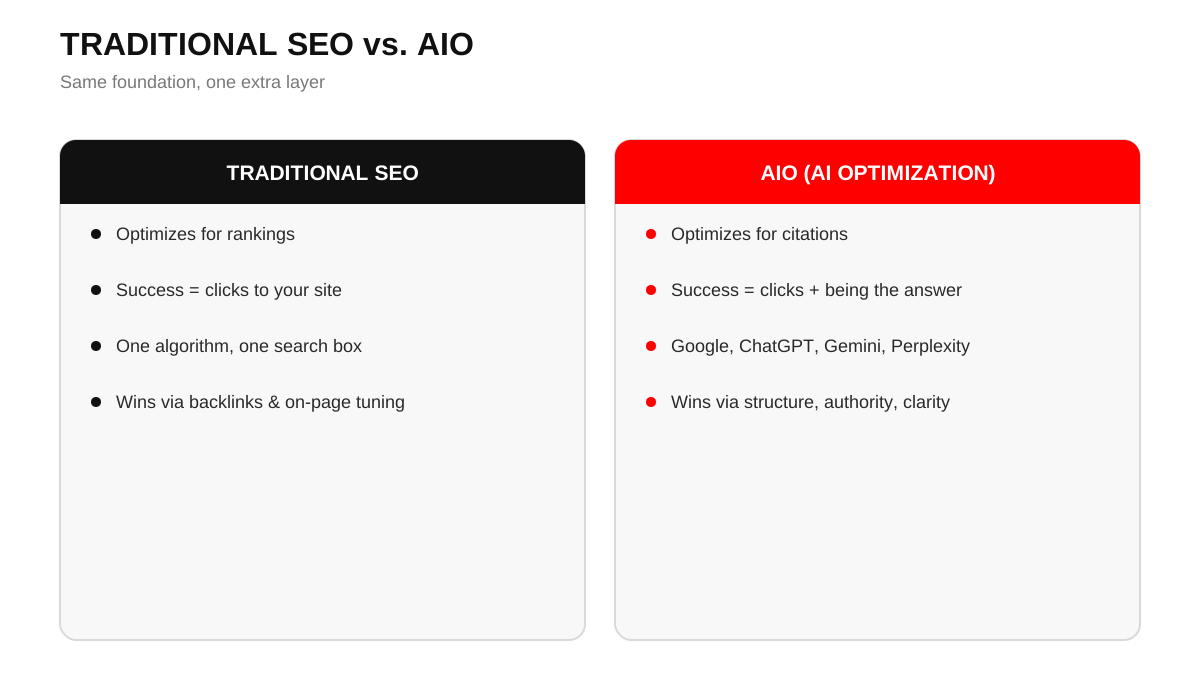
AIO, AEO, and GEO all describe roughly the same discipline: structuring content, entity signals, and authority so search engines and AI assistants can understand, extract, and cite a business’s information directly in an answer, rather than listing it as one link among ten. Classic SEO measures success in rankings and clicks. AIO adds a second question: does an AI system trust this page enough to quote it, summarize it, or send a customer to it without a click at all?
Does Google Have a Secret AI Overviews Algorithm?
Not according to Google itself. Google’s own guidance for AI-powered features points back to the same fundamentals that have driven search for years: crawlable and indexable pages, genuinely helpful content, solid internal linking, a good page experience, and structured data that actually matches what’s on the page. In its AI Optimization guide, Google confirms there’s no special AI-only schema requirement, and it cautions businesses against gimmicks such as artificially chopping content into “AI-friendly” chunks or publishing a special file — often called an llms.txt — purely to try to influence which pages get cited. The advice is blunt: invest in real SEO fundamentals, not AEO shortcuts.
The Building Blocks of an Effective AIO Strategy
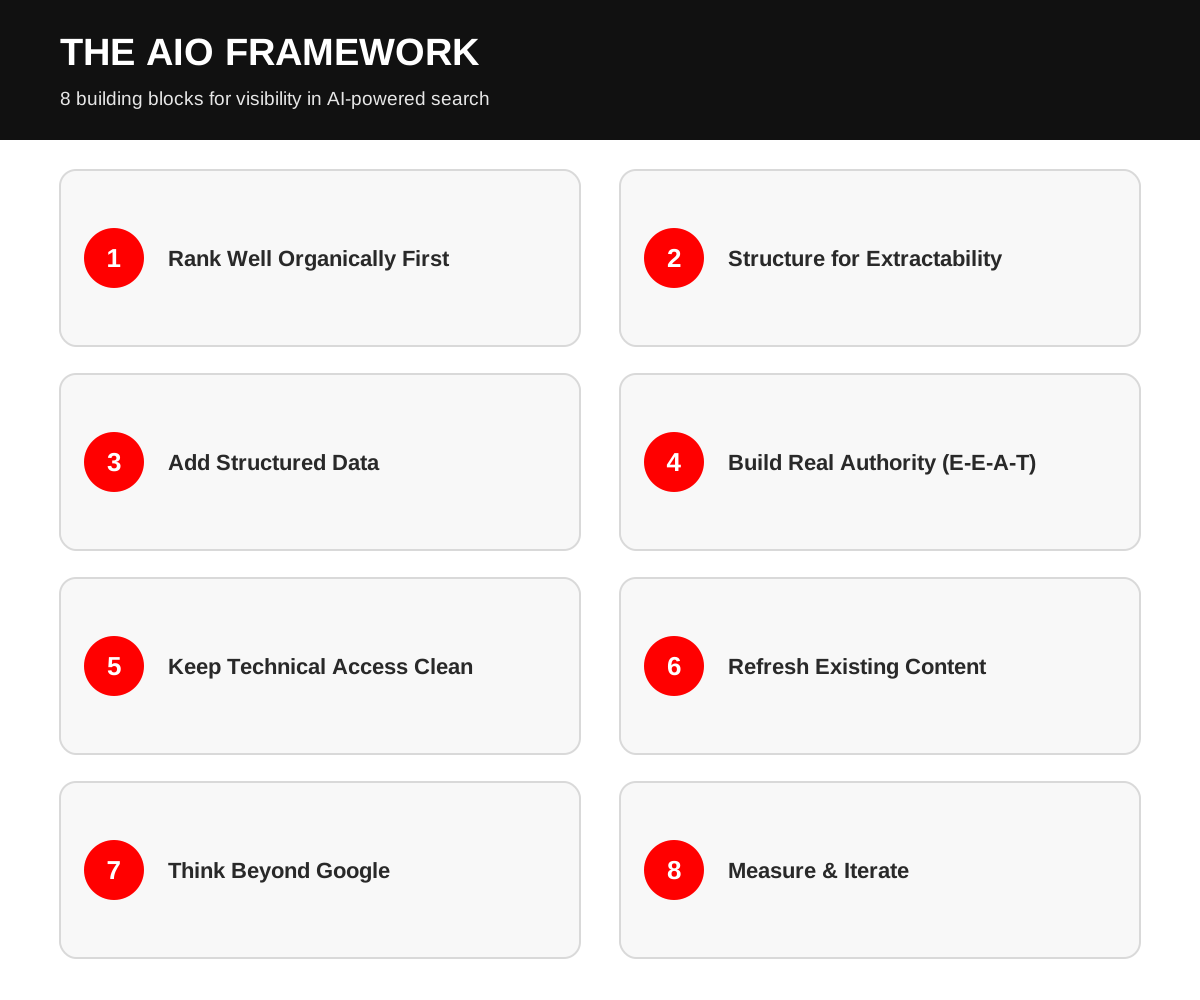
With that in mind, here’s what actually tends to move the needle for businesses trying to show up in AI-generated answers.
1. Rank Well Organically First
AI Overviews are largely built from pages that are already ranking. Google’s systems look at the top organic results for a query, pull out key points across several of them, and summarize the result — there’s no separate AI-only index working behind the scenes. A page that isn’t visible in standard organic search has almost no chance of being cited in an AI answer, so solid on-page and technical SEO is still the foundation everything else sits on.
2. Structure Content So It Can Be Lifted in Chunks
AI systems tend to extract self-contained blocks of content rather than reading a full page top to bottom. Headings phrased the way a person would actually ask a question, a direct answer in the next two or three sentences, and supporting detail in bullet points, tables, or a short FAQ all make a page easier to summarize accurately. Long, meandering paragraphs are more likely to get skipped entirely.
3. Use Structured Data Where It Actually Fits
Schema markup — Article, FAQPage, HowTo, Organization, and similar types — helps search engines understand what a page is about and who published it. It doesn’t guarantee inclusion in an AI Overview, and there’s no dedicated AI-only schema to chase, but it remains one of the clearest ways to describe a page’s content and entities accurately to any system reading it.
4. Build Real Authority, Not Just Keywords
AI systems, like people, weigh whether a source can be trusted. Visible author bios, cited sources, clear publish and update dates, and consistent naming for a brand across its own site and third-party mentions all reinforce that a business is a credible entity in its field, not just a page that happens to rank.
5. Keep the Technical Foundation Clean
Content that search bots can’t fully crawl, or that only renders after heavy client-side JavaScript, can be effectively invisible to the systems generating AI answers — even if it looks fine to a human visitor. Confirming that important content is reliably crawlable is often a bigger unlock than any content rewrite.
6. Refresh What’s Already Published
AI systems favor sources that look current and well maintained. Updating the statistics, dates, and examples in an older post can restore its visibility in AI-generated answers even when its ranking position hasn’t moved — often a faster win than publishing something brand new.
7. Think Beyond a Single Search Engine
ChatGPT, Perplexity, Gemini, and Copilot each pull from a different mix of sources, but they reward similar underlying signals: a clear entity presence, consistent information across the web, and content that answers a question directly. Optimizing for Google alone leaves visibility on the table with every other assistant a customer might ask instead.
8. Measure It and Keep Iterating
Search Console’s Generative AI performance report, rolled out in June 2026, shows which queries trigger AI Overviews and AI Mode and whether a site is being cited. Treating AIO as a one-time project, rather than an ongoing habit of auditing, updating, and re-checking, is the most common way businesses lose ground they’ve already gained.
A Word of Caution: Skip the “AEO Hacks”
It’s tempting to look for a shortcut — a special file, an unusual markup trick, a way to game the system. Google has said plainly that these tactics aren’t the real lever, a point Search Engine Journal covered in detail when the guidance was published, and content that’s been artificially restructured just to please an algorithm tends to read poorly to actual customers too. The strategies above work because they make content genuinely more useful and easier to understand, for AI systems and for the people those systems are ultimately trying to help.
Frequently Asked Questions
Is AIO the same thing as SEO?No, but it’s built directly on top of it. Everything that makes a page rank well organically still matters. AIO adds a layer of structure, authority, and clarity so AI systems can extract and cite that content with confidence.
Do I need an llms.txt file to show up in AI Overviews?No. Google has confirmed there’s no special file or markup required to appear in AI Overviews or AI Mode. Structured data is still worth using for rich results generally, just not as a dedicated AI shortcut.
How long does AIO take to show results?Similar to SEO generally: expect a matter of months rather than days. Much of the work involves earning organic rankings and authority signals that build over time rather than flipping a single setting.
AIO isn’t a separate add-on service — at SEO District, it’s built into how we approach every Search Engine Optimization engagement, from technical audits and structured data to the kind of content that earns citations instead of just impressions. If you want a clearer picture of how your business currently shows up in AI-generated search results, get in touch and we’ll walk you through it.


